Wednesday, March 7, 2012

The Barotse Agreement -a by product of British deceit


THE FALLACY OF THE BAROTSELAND AGREEMENT

By Patriotic Zambian


The Barotseland Agreement has been in the news for many years now but I feel there are many issues which are not taken seriously when looking at this issue by both the pro- and anti- groups.

When approaching the BA64 one needs to understand that this issue does not begin in 1964 when it was signed but has much deeper roots. It must be remembered that the British pushed for the BA64 because they had obligations towards the Barotseland Protectorate which they wanted to get rid of.

Herein comes the Lochner Concession.

On 27th June 1890, Lewanika and his son Litia, Ngambela Mwauluka and 38 indunas signed the concession, which ‘shall be considered in the light of a treaty between my said Barotse nation and the government of Her Britannic Majesty Queen Victoria’.

It needs to be pointed out here that the BSAC misrepresented that they were signing on behalf of the British government when in fact they were signing for a commercial concern.

The company was not granted administrative rights but received ‘the sole, absolute, exclusive and perpetual right and power’ to ‘search for, dig, win and keep’ any and all minerals in Barotseland.

Francois Coillard recorded what the Litunga and his council considered to be the extent of his territory; they made the very dubious claim that Lozi authority was recognised by the Lunda and Luvale to the North, the Kaonde to the North east, the Ila to the East and the Tonga and Toka to the South East.

Thus Barotseland ceased to be a separate entity in 1911 contrary to what a lot of people are saying today.

In effect then, through the Lochner Concession, the BSAC assumed the whole of what was to become North-western Rhodesia; it’s authority and control over all the peoples named by Lewanika rested solely on its agreement with the Lozi; no independent agreements were ever signed by chiefs of the Lunda, Luvale, Ila, Tonga or Toka, who nevertheless had to submit to BSAC overrule. Talk of being sold down the river.

Lewanika’s copy of the Lochner Concession reveals that he hoped to obtain development aid and external protection without any reduction in his internal authority. ‘The company shall not be allowed or obliged to interfere in any matter concerning the Litunga’s power or authority over any of his own subjects.

In the companys copy of the Treaty, the emphasis upon development under Lewanika’s supervision and authority falls away; secondly, it is merely noted that the ‘Company shall not be obliged to interfere’ in the internal affairs of Lewanikas state while nothing is said about the Company not being allowed to do so by the Litunga.

When George Middleton, a lay preacher, revealed that Lochner was an agent of the Company and not the British crown, Lewanika was livid with anger. He wrote for assurances to Queen Victoria.

‘I am troubled by this and should the report spread, there will be trouble and excitement in my country and people.’ His protestations and his repudiation of the Lochner Concession were not taken seriously by the Bristish authorities in Cape Town and London.

The official view was that the Secretary of State did not have to express approval or otherwise of the Lochner Concession since it did not concern any exercise of powers of government or administration by the BSAC.

Lewanika’s protestations reveal not only the extent to which he was influenced by missionaries , but also raises the question of the extent to which he understood what was involved in the concession and its significance.

Lewanika claimed that he granted the concession because he was made to understand that it was the equivalent of a treaty with the Queen.

As a result of the North-western Rhodesia-Barotseland Order-in-Council of 1899, the BSAC soon exercised overweening influence in all of North-western Rhodesia and, specifically, in Barotseland.

By this Order in Council of 1899, Lewanika and the Lozi state had lost their sovereignty to the Queen and Her Majesty’s Government. No evidence has come to light to suggest that at the time Lewanika was formally told of the Order in Council and of its significance to him as king and to the Lozi state. But the Colonial Office informed the BSAC of this in very clear and direct terms.

The order superceded the Lawley Concession, and through it Lewanika’s negotiations and his concessions were operative only in as far as they are ratified by Her Majesty or are not inconsistent with the Order in Council.

In the second place Company rule steadily ate away at Lewanika’s power inside Bulozi and he suffered humiliation after humiliation and made protest after vain protest.

The operation of the BSAC had great effect on the social and economic structure of Bulozi. Slavery, tribute labour and tribute were abolished and instead paid labour and taxation were introduced. The missionaries pointed out that the instrument of change in Bulozi was no more Lewanika but the ‘new Government which has become the instrument of transformation.’

By an Order in Council of 4 May 1911 Barotseland/North-western Rhodesia; North-eastern Rhodesia were amalgamated as one territory-Northern Rhodesia, still administered by the BSA Company.

Thus Barotseland ceased to be a separate entity in 1911 contrary to what a lot of people are saying today.

On 1 April 1924 the Administration of Northern Rhodesia became the direct responsibility of THE COLONIAL OFFICE. Herbert Stanley was appointed as Governor and Northern Rhodesia became an official Protectorate of the United Kingdom, with the capital in Livingstone.The capital was moved to Lusaka in 1935.

When the Crown assumed full power of Government over Northern Rhodesia in 1924, the Order-in- council which constituted the administration of the territory, enjoined that nothing in the provisions conferring power to regulate the natives shall be deemed to limit or affect the exercise by the King of Barotseland of his authority:{1911,1924,1929,1936,1953 Laws} N.B. Article 41 of the Northern Rhodesia Order – in – Council of 1924 reads:

1. It shall not be lawful for any purpose whatever except with the approval of the Secretary of State to alienate from the Chief and people of the Barotse, the territory reserved from prospecting by virtue of the concessions from Lewanika to the British South Africa Company dated the 17th day of October, 1900 and the 11th of August 1900 and the 11th of August, 1909.

2. All rights reserved to or for the benefits of natives by the aforesaid concessions as approved by secretary of State shall continue to have force and effect.

This, in theory, was how it was agreed to work but as can be observed above, neither the BSAC nor the British Crown saw need to adhere to this agreement as signed.

Thus in 1924, the British government inherited the responsibilities of the BSAC and the attendant issues accompanying the Lochner concession.

The Zambian independence issue caused apprehension since Lozi’s claim to a special status within Zambia as within Northern Rhodesia depended on the nineteenth century treaties with the BSAC and the British Government.

In 1964, at the time of independence, the British wishing to absolve themselves of their obligations towards Barotseland and knowing the unviability of a stand-alone Barotseland state, pushed for the signing of the BA64 so that the new nation of Zambia would take over their responsibilities.

Although given special dispensation for local government administration from the date of signing of the Lochner Concession, Barotseland was never considered as a separate country from first North-western Rhodesia and later Northern Rhodesia. It was a protectorate within another Protectorate, Northern Rhodesia.

As a British Protectorate, it was governed from Livingstone and later Lusaka.Geographically, Barotseland has always been drawn within the international boundaries of Northern Rhodesia and its boundaries have always been shown as provincial boundaries by the British. This is unlike Basutoland, Swaziland and Bechuanaland which were always shown within separate international boundaries. The present boundaries of Western Province are more or less the same as the old Barotseland contrary to the claims of people today who want to extend them to the railway line and Copperbelt

Lewanika’s granting of rights to the BSAC to the extent he did was illegal and cannot stand up to international scrutiny by today’s standards. It is not acceptable that he could have granted rights in areas where he had no jurisdiction and expect that the people in those areas are just going to accept with their arms folded.

In calling for the restoration of the BA64, the tribes which came under BSAC rule as a result of the Lochner Concession must categorically be taken as

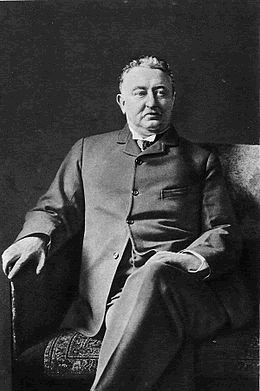
separate from the old Barotseland. The BA64 is a by-product of the original deceit by Frank Lochner on behalf of Cecil Rhodes and the BSAC. With the knowledge we have now, we cannot allow an injustice of 1890 to be legitimised by an agreement of 1964.

The Barotse Agreement -a by product of British deceit


Wednesday, March 7, 2012, 12:57 pm

THE FALLACY OF THE BAROTSELAND AGREEMENT

By Patriotic Zambian
The Barotseland Agreement has been in the news for many years now but I feel there are many issues which are not taken seriously when
looking at this issue by both the pro- and anti- groups.
When approaching the BA64 one needs to understand that this issue does not begin in 1964 when it was signed but has much deeper roots. It must be remembered that the British pushed for the BA64 because they had obligations towards the Barotseland Protectorate which they wanted to get rid of.
Herein comes the Lochner Concession.
On 27th June 1890, Lewanika and his son Litia, Ngambela Mwauluka and 38 indunas signed the concession, which ‘shall be considered in the light of a treaty between my said Barotse nation and the government of Her Britannic Majesty Queen Victoria’.
It needs to be pointed out here that the BSAC misrepresented that they were signing on behalf of the British government when in fact they were signing for a commercial concern.
The company was not granted administrative rights but received ‘the sole, absolute, exclusive and perpetual right and power’ to ‘search for, dig, win and keep’ any and all minerals in Barotseland.
Francois Coillard recorded what the Litunga and his council considered to be the extent of his territory; they made the very dubious claim that Lozi authority was recognised by the Lunda and Luvale to the North, the Kaonde to the North east, the Ila to the East and the Tonga and Toka to the South East.
Thus Barotseland ceased to be a separate entity in 1911 contrary to what a lot of people are saying today.
In effect then, through the Lochner Concession, the BSAC assumed the whole of what was to become North-western Rhodesia; it’s authority and control over all the peoples named by Lewanika rested solely on its agreement with the Lozi; no independent agreements were ever signed by chiefs of the Lunda, Luvale, Ila, Tonga or Toka, who nevertheless had to submit to BSAC overrule. Talk of being sold down the river.
Lewanika’s copy of the Lochner Concession reveals that he hoped to obtain development aid and external protection without any reduction in his internal authority. ‘The company shall not be allowed or obliged to interfere in any matter concerning the Litunga’s power or authority over any of his own subjects.
In the companys copy of the Treaty, the emphasis upon development under Lewanika’s supervision and authority falls away; secondly, it is merely noted that the ‘Company shall not be obliged to interfere’ in the internal affairs of Lewanikas state while nothing is said about the Company not being allowed to do so by the Litunga.
When George Middleton, a lay preacher, revealed that Lochner was an agent of the Company and not the British crown, Lewanika was livid with anger. He wrote for assurances to Queen Victoria.
‘I am troubled by this and should the report spread, there will be trouble and excitement in my country and people.’ His protestations and his
repudiation of the Lochner Concession were not taken seriously by the Bristish authorities in Cape Town and London.
The official view was that the Secretary of State did not have to express approval or otherwise of the Lochner Concession since it did not concern any
exercise of powers of government or administration by the BSAC.
Lewanika’s protestations reveal not only the extent to which he was influenced by missionaries , but also raises the question of the extent to which he understood what was involved in the concession and its significance.
Lewanika claimed that he granted the concession because he was made to understand that it was the equivalent of a treaty with the Queen.
As a result of the North-western Rhodesia-Barotseland Order-in-Council of 1899, the BSAC soon exercised overweening influence in all of North-western Rhodesia and, specifically, in Barotseland.
By this Order in Council of 1899, Lewanika and the Lozi state had lost their sovereignty to the Queen and Her Majesty’s Government. No evidence has come to light to suggest that at the time Lewanika was formally told of the Order in Council and of its significance to him as king and to the Lozi state. But the Colonial Office informed the BSAC of this in very clear and direct terms.
The order superceded the Lawley Concession, and through it Lewanika’s negotiations and his concessions were operative only in as far as they are ratified by Her Majesty or are not inconsistent with the Order in Council.
In the second place Company rule steadily ate away at Lewanika’s power inside Bulozi and he suffered humiliation after humiliation and made protest after vain protest.
The operation of the BSAC had great effect on the social and economic structure of Bulozi. Slavery, tribute labour and tribute were abolished and instead paid labour and taxation were introduced. The missionaries pointed out that the instrument of change in Bulozi was no more Lewanika but the ‘new Government which has become the instrument of transformation.’
By an Order in Council of 4 May 1911 Barotseland/North-western Rhodesia; North-eastern Rhodesia were amalgamated as one territory-Northern Rhodesia, still administered by the BSA Company.
Thus Barotseland ceased to be a separate entity in 1911 contrary to what a lot of people are saying today.
On 1 April 1924 the Administration of Northern Rhodesia became the direct responsibility of THE COLONIAL OFFICE. Herbert Stanley was appointed as Governor and Northern Rhodesia became an official Protectorate of the United Kingdom, with the capital in Livingstone.The capital was moved to Lusaka in 1935.
When the Crown assumed full power of Government over Northern Rhodesia in 1924, the Order-in- council which constituted the administration of the territory, enjoined that nothing in the provisions conferring power to regulate the natives shall be deemed to limit or affect the exercise by the King of Barotseland of his authority:{1911,1924,1929,1936,1953 Laws} N.B. Article 41 of the Northern Rhodesia Order – in – Council of 1924 reads:
1. It shall not be lawful for any purpose whatever except with the approval of the Secretary of State to alienate from the Chief and people of the Barotse, the territory reserved from prospecting by virtue of the concessions from Lewanika to the British South Africa Company dated the 17th day of October, 1900 and the 11th of August 1900 and the 11th of August, 1909.
2. All rights reserved to or for the benefits of natives by the aforesaid concessions as approved by secretary of State shall continue to have force and effect.
This, in theory, was how it was agreed to work but as can be observed above, neither the BSAC nor the British Crown saw need to adhere to this agreement as signed.
Thus in 1924, the British government inherited the responsibilities of the BSAC and the attendant issues accompanying the Lochner concession.
The Zambian independence issue caused apprehension since Lozi’s claim to a special status within Zambia as within Northern Rhodesia depended on the nineteenth century treaties with the BSAC and the British Government.
In 1964, at the time of independence, the British wishing to absolve themselves of their obligations towards Barotseland and knowing the unviability of a stand-alone Barotseland state, pushed for the signing of the BA64 so that the new nation of Zambia would take over their responsibilities.
Although given special dispensation for local government administration from the date of signing of the Lochner Concession, Barotseland was never considered as a separate country from first North-western Rhodesia and later Northern Rhodesia. It was a protectorate within another Protectorate, Northern Rhodesia.
As a British Protectorate, it was governed from Livingstone and later Lusaka.Geographically, Barotseland has always been drawn within the international boundaries of Northern Rhodesia and its boundaries have always been shown as provincial boundaries by the British. This is unlike Basutoland, Swaziland and Bechuanaland which were always shown within separate international boundaries. The present boundaries of Western Province are more or less the same as the old Barotseland contrary to the claims of people today who want to extend them to the railway line and Copperbelt
Lewanika’s granting of rights to the BSAC to the extent he did was illegal and cannot stand up to international scrutiny by today’s standards. It is not acceptable that he could have granted rights in areas where he had no jurisdiction and expect that the people in those areas are just going to accept with their arms folded.
In calling for the restoration of the BA64, the tribes which came under BSAC rule as a result of the Lochner Concession must categorically be taken as
separate from the old Barotseland. The BA64 is a by-product of the original deceit by Frank Lochner on behalf of Cecil Rhodes and the BSAC. With the knowledge we have now, we cannot allow an injustice of 1890 to be legitimised by an agreement of 1964.

Tuesday, November 15, 2011

Implications of President Michael Sata's Irrational Appointments

Barely two months after wrestling power from the corrupt and much discredited Rupiah Banda administration, President Michael Chilufya Sata is already becoming prone to making irrational and unthinking appointments of corrupt people that lack morals and integrity to various government positions. What started as a one-off guff is maturing into a daily ritual. Several appointments made so far, no names mentioned here, have left many Zambians worried, concerned and wondering whether the man at the helm of the Zambian Government is acting in his right frame of mind or not. A couple of days after his election, Sata stated that he is allergic to corruption. The question now is, if he is truly allergic to corruption, "Why has he such affinity for corrupt people, people that stole from the Zambia people, people still on trial or cases pending before the courts of law?" One wonders where Michael Sata was when many of his irregular appointees where found with serious cases to answer? Was he living in a part of the world that was disconnected from the media?

While we all expect the president to make some appointments, we also believe that it is dangerous to let him on the loose and continue making serious mistakes. He is acting with impunity and total disregard and betrayal of the people that voted for him in the first place. One cannot agree more for the urgent need to have a constitution in place that will ensure checks and balances to guarantee the separation of powers. It is becoming all too clear that the PF government is on the path to renegade on most of their campaign promises. It is extremely disconcerting to see the PF leadership that we thought held much promise for a clean and upright governance start making unconscious appoints, and back-pedaling on the promise to re-introduce windfall taxes on mines.

The Zambian people are quick in starting to lose trust and if Sata continues in the manner he has been going about his appointments he will soon find that his support will thin out in no time. It is encouraging to see Dr. Sondashi advise President Sata to revoke the appointment of Emmanuel Mwamba as Permanent Secretary for Northern Province. Dr. Sondashi's courage is applauded. If the president does not consult his cabinet to arrive at rational decisions, this is an opportunity to correct the mess he is getting himself in. If he does consult his ministers but the ministers are just wimps, this is the time for them all to stand up for what is right and stop endorsing unrealistic ideas advanced by the president. 

Thursday, November 10, 2011

Wild Cats and King Cobra

Nov 10, 2011

After just two months in office, President Michael Chilufya Sata has made a complete turnaround in his attitude to China. He once criticised Chinese investors but now wants to use them to develop Zambia’s economy.

The full force of his government is focused on reassuring its partners in Beijing, leaving workers and human rights groups to attack the activities of Chinese mining companies. In opposition, Sata (aka King Cobra) blamed Chinese investors for abuse and corruption; as President, he blames the former government for fraud in handing out working papers.

Every ministry that has any dealings with the Chinese government or Chinese companies has started a charm offensive. At a 28 October State House luncheon given by Sata for the Chinese community in Zambia, he told Ambassador Zhou Yuxiao that he would send Zambia’s founding President Kenneth Kuanda to Beijing to thank the Chinese government for its investment and aid. Rather than blame Chinese companies for unreliable construction projects or for bringing large numbers of Chinese labourers into the country, Sata blames the former government.

After lunch, Minister of Mines and Mineral Development Wylbur Simuusa told Chinese companies the government hopes for a period of unprecedented good relations with Beijing. He echoed the new Patriotic Front government’s message that China’s investments will be protected and that its companies will be able to engage in any economic activity as long as they respect Zambia’s laws. At China’s Lusaka Embassy on 31 October, Simuusa reassured Ambassador Zhou that he would work to reduce misunderstandings between the two governments after the recent labour unrest. Simuusa then left for an official visit to China.

On 2 November, Finance Minister Alexander Chikwanda told Zhou that China is Zambia’s most reliable partner. His ministry will set up a unit to work more closely with the Embassy on the follow-up of Chinese projects.

Since defeating incumbent Rupiah Banda and the Movement for Multiparty Democracy (MMD) in the 20 September polls, Sata’s popularity has soared. After campaigning on populist slogans of ‘more jobs, less taxes and more money in your pockets’, he has made huge statements and attempted to reverse the Banda government’s more unpopular decisions. Sata, who says his PF will lead Zambia on the principles of the ten commandments, has pledged zero tolerance for corruption.

Sata’s shake-up

In the first month of his presidency, Sata fired Bank of Zambia Governor Caleb Fundanga and its board, reversed the FirstRand takeover of Finance Bank, briefly halted metal exports and purged elements of the Anti-Corruption Commission, Drug Enforcement Commission, the police and Zambia Defence Force. He also directed that the minimum wage for non-unionised industrial workers be increased from 419,000 kwacha (US$85) to K1 million. Sata’s changes, so far, have focused on pro-poor programmes and combating corruption in the civil service. He promised drastic change within 90 days. His critics argue that some of his pronouncements and decisions on graft are not genuine but perceived. ‘This has come at a cost, promoting a high level of uncertainty,’ says a governance expert.

Workers saw the victory of Sata, a vocal critic of Chinese workplace practices (AAC passim), as a signal for poorly paid Zambian workers at Chinese mines to demand better working conditions. ‘The workers have expressed their views [at the ballot box] and now they feel liberated,’ Labour Minister Fackson Shamenda said on 24 October. Chinese-owned mines and industries have been hit by an unprecedented wave of industrial unrest. Chinese companies, chiefly in the mining sector, have suffered the brunt of the wild-cat strikes in the wake of Sata’s election.

The ‘Chinese have been responsible for the economic growth seen in Zambia in recent times… and therefore it goes without saying that instability at Chinese [mining] operations spells doom for the economy,’ an industry expert told Africa-Asia Confidential, adding that ‘the President needs to take responsibility for these strikes because ultimately the buck stops with him.’

Zambians working in Chinese mines are some of the lowest-paid employees in the hazardous mining sector. Sata won by a huge margin in Copperbelt Province, where he has enjoyed unwavering support since the 2006 polls. Under the MMD government, workers complained that foreign capital took precedence over workers’ welfare. Labourers continue to work under poor conditions and without proper protective equipment (see box).

Chambishi Copper Mines, owned by Non-Ferrous China Africa, was hardest-hit by the strikes that started on 18 October. On news of Sata’s elections, NFCA gave its 2,000-strong workforce a pay rise of 85%. The windfall was not meant to last for ever. The workers resisted the reversal and the mine had been rocked by stoppages, resulting in millions of dollars in losses. Sata has avoided commenting on the matter but both Labour Minister Shamenda and Mines Minister Simuusa backed the miners’ demands as ‘justified’. Sata sent a Simuusa-led delegation to resolve the matters using quiet diplomacy.

Artisans and craftsmen at NFCA are paid between K850,000 and K1.1 mn. Labourers contracted by NFCA’s main underground contractor, JCHX, are paid K450,000. ‘We want equal pay with KCM [India's Vedanta Resources-owned Konkola Copper Mines] and Mopani,’ shouted one of the protesting miners at NFCA. ‘We did the same copper and sell it to the people; we need to be paid the same,’ said other protesting miners.

Union sympathies

Former trades unionists occupy the top jobs at the three ministries that deal most with Chinese mining companies. The Labour Minister, his Deputy and the Mines Minister all share a union background. They engaged the Chinese companies in talks about wages rather than leaving it to the unions. On 11 October, Deputy Labour Minister Rayford Mbulu directed NFCA to award workers a K2 mn. salary increase to align pay standards with other firms. Ambassador Zhou stepped in to defend the interests of the state-owned NFCA on 24 October: ‘The increase is a bit too much and not realistic.’

A source at Chambishi said that NFCA sent representatives to other major mining companies in 2010 to investigate their pay structures but did not change its practices after finding that it paid less. After the sacking and rehiring of more than 1,000 NFCA workers on 23 October – with the threat of sorting out the troublemakers – a new round of talks started. On 1 November, the mining companies and unions started a two-month negotiation period about collective bargaining agreements.

Christopher Silute, the Deputy National Secretary of the National Union of Miners and Allied Workers, told AAC that the unions want the government to let them represent workers. ‘When we go to negotiate for higher salaries, what we are usually told is “your government has told us when we signed these agreements that the minimum wage here is ABC”, so it becomes very difficult because we don’t know what they’ve agreed.’ He said that Chinese miners originally opposed unions but the current government’s intervention means that all workers can join a union.

Meanwhile, a research note at the Chinese Ministry of Commerce suggested that these moves towards better regulation would squeeze profits at a time when global copper demand is flagging, ultimately affecting Zambia’s ability to attract investment./Africa-Asia Confidential

Monday, November 7, 2011

Zambia: Africa On Foot And Unplugged

Richard Bangs
Author, 'The Lost River'

Posted: 11/7/11 10:29 AM ET

"I will make this beautiful land better known to men that it may become one of their haunts. It is impossible to describe its luxuriance." -David Livingstone, in Zambia, 1866


It begins a bit like an Agatha Christie novel. Six of us, each representing a different country --India, Syria, Mexico, Zimbabwe, Spain and the Republic of California -- receive an invitation to join a week-long retreat at a private estate with no access to the outside world. We're given no itinerary and no details. We're just told to meet at the Royal Livingstone Hotel in Livingstone, Zambia at 3 p.m. on the appointed date with a flashlight and our spirit of choice.

We gather at the hotel, a five-star colonial throw-back wrapped in manicured lawns and luxuriant gardens where zebra and giraffe roam, a spa beckons, a golf-course sprawls and the gin and tonics flow along the dark-wood paneled traveler's bar like a Happy Valley creek. This is poignant for me, as I spent some quality time here in the early 80s, when I made the first descent of the Zambezi from below Victoria Falls to Lake Kariba, picking up where David Livingstone left off in 1855. (He'd peered over the great sheeting precipice of water, twice as high as Niagara and a mile wide, and decided, for country and health, to portage several hundred miles downstream.) Back then we stored our gear at The Rainbow Lodge, a series of run-down mud and grass rondevaals, a short walk from the great Falls at a rate of $6 a night. No air-conditioning, no phones or electronics, and you had to lock the windows and doors at night to keep out the vervet monkeys. It seemed the sort of place David Livingstone himself might have slept, relishing the remote and authentic.

The Rainbow is now The Royal Livingstone. What would Dr. Livingstone say if he could knock into his namesake today?


Our orientation is a walk to the Victoria Fall, one of the natural wonders of the world. My memories jog to our first descent, in 1981, just after black-majority ruled Zimbabwe emerged. The river was littered with land mines from the war and we had to take professional sappers with us, who would sweep each beach before we could unload the rafts in the evenings. The most sinking moment for me was when I pushed off from The Boiling Pot at the base of the Falls, leading the historic expedition. Zambian President Kenneth Kaunda, diplomats and reporters from National Geographic and the Guardian watched from the bridge above as I promptly capsized.

"Is that the way they do it?" Dr. Kaunda asked in surprise.

Zambia has never been widely known as a tourist destination. Zambia, in fact, is not widely known for much of anything. What little global recognition it enjoys comes more from the antique cuts of the colonial penknife, the borders it shares with volatile neighbors: Democratic Republic of the Congo to the north, Angola and Mozambique to the west and east, and Zimbabwe to the south. It was once the third largest producer of copper in the world and for a time Zambia's currency was among the most valuable in the world. There was a time when per-capita income equaled 800 US dollars, second to South Africa in the sub-Saharan region.

Zambia is now very small beer in the mining world and it has yet to find a viable replacement for its copper industry. After founding the country, Kenneth Kaunda oversaw its descent into economic ruin over the course of his 27-year socialist rule. He tried all sorts of schemes to bring back its glory, including providing support to an American con-artist named Farley Winston, who sold the head of state on a contraption that ostensibly converted grass to diesel. KK, as the president liked to be called, had visions of an African OPEC and banned the burning of grass until the scam was exposed. The current government has pinned its hopes on eco-tourism. Yet, even though Zambia has 19 national parks and 32 game management areas (30% of the country), and some of the greatest concentrations of wildlife in the world, the gawkers here have always been scarcer than the game.

That first night, we gather at the fancy restaurant -- complete with a hovering violinist connected to Bluetooth speakers -- and begin the competitive game that so palpably plays itself out on the veldt. We jockey for dominance, comparing the length of our camera lenses, power ordering ("I'll have the crocodile...and make it snappy") prating on about our air carrier (I win, having indulged in Emirates, current king of the air) and sparing with arcane trivia (what is the definition of "subtropical?"). The hotel, of course, has high-speed wireless, so we whip out weapons of choice: Blackberries, iPads, iPhones, Androids, even a Windows 7 phone. We conquer the question: "subtropical" describes the climatic region found adjacent to the tropics, usually between 23.5 and 40 degrees of latitude in both hemispheres. It's good to be smart, or at least have a smart phone.


But the following morning we begin the transition to a different world. We board two small planes, and take the 90 minute flight to the edge of the Kafue National Park, the largest reserve in Africa, which may boast the continent's greatest diversity of wildlife. But it is a place little-visited, little known, with no Hemingway, Angelina or Madonna's in its visitor logs.

From the dirt strip we load a couple of Toyota Land Cruisers, and trundle to a pontoon ferry, cross the limpid Kafue River and head upstream for another hour, until there is a fork in the road with a carved wooden sign: "KRC."

"Kentucky Roasted Chicken?" I ask.

"No," our host corrects: "Kafue River Camp, our destination."

We spill from the vehicles into scene that could have been painted by Rousseau, dotted with a few modest structures and dominated by the sweeping curl of the gin-clear Kafue River. There is a thatched dining area, a wooden deck overlooking the river, a kitchen with an earthen pizza oven and four 2-person chalets, replete with showers heated by wood-burning stoves. That's it. Now what? This seems like an adventure without a purpose.

The river looks cool and tempting, ideal for a swim, but our host says no, and introduces us to a staff member who was attacked by a crocodile and almost pulled under. He shows us the scars, a messy matrix of wounds along his thigh that look like third-degree burns. The ancient Greeks called the beast Kroko-drilo, "pebble worm"--a scaly thing that shuffled and lurked in low places. Here it's called "flatdog" or "mobile handbag." The man-eating Nile crocodile has always been on "Man's worst enemies" list. It evolved 170 million years ago from the primordial soup as an efficient killing machine. More people are killed in Africa by crocodiles each year in Africa than by all other animals combined. Their instinct is predation, to kill any meat that floats their way, be it fish, hippo, antelope, or human.

Our host, who was born in Rhodesia, tells us his father once capsized off the coast of Mozambique and hung on to the vessel for his life until he was rescued by Portuguese sailors. When he confessed he was shivering in fear for the legendary great white sharks in the region, a sailor reassured him: "You needn't worry...the crocs have eaten them all."


Rather than swim, we take a game drive. We tool through a wonderland of raintrees, sausage trees, ironwood, and the candelabra-shaped euphorbias. We wind by parades of wildlife: impala pelting around neurotically, vast almond eyes on slim necks; fluffy pukus, the colors of sunrise on their backs; Lichtenstein's hartebeest, bouncing along the savannah as though on a trampoline; waterbuck with the white toilet-seat logos on their rumps; pajama-wearing zebra. Bringing up the rear are Reedbuck, Sable, duiker, Warthog, Bushbuck and Baboons. This is a carnivore's dream and all the browsing bovids live lives of perpetual skittishness, knowing they can never let guards down.

At this point several of us are feeling similar, as we're going cold turkey on connectivity. There is no office here with a cranky computer hidden behind a desk. There is not even a shortwave radio at KRC. By sunset we're back at camp, and begin to unwind with G and Ts, single malt and Kentucky bourbon. After a protracted dinner of kudu stew and meaty conversation, salted with the eerie whoops of hyenas, our host tells us that we will reunite at daybreak. Jetlag is still a sidekick, so the question is how do we arise with no alarm clocks or wake up calls in the rooms.
"Not to worry. It will happen," he pronounces.

The following morning we're all awakened by hippos blowing their tubas just yards from our chalets. About five feet tall, weighing in at about five tons -- about that same as our two 4WD vehicles -- hippos are proportionally the fattest animals on earth, but for short sprints can run as fast as a horse. Though vegetarians they, too, are quite dangerous, and will attack if feel threatened, easily snapping a human body in two with their carrot-sized molars and steam-shovel jaws. The baritone harrumphing hippos make is our host's favorite sound, and he casts he would love to have the river chorus as his ring tone.

Soon after, we're off on a two-hour mountain bike ride before breakfast, through a woodland of brachystegia, down ancient tracks (this was where Joshua Nkomo, founder and leader of the Zimbabwe African People's Union was based for a spell while trying to overthrow Ian Smith's Rhodesia, and we're benefiting from his network or roads), and down game trails. Fat-tired bikes are now the vehicles of choice for poachers, with their speed, light frames and quiet spins. Trailing us is Moses, a game guard, also on two wheels, wearing Bata-slip-ons and an AK-47 slung across his shoulder, with ten rounds. Because of the small caliber the Russian-made automatic will have a hard time dropping a charging elephant or hippo, though it is ideal to nab a band of poachers or take over the Comoros.


Towards the end of the ride Joseph, a former tech exec, competitive runner and boxer, is almost smashed by a scooting Puku, who leaps across the path just inches in front of his front tire. But the real danger here, it seems, is not the ergonomically-designed antelope or even a wild cat. As the sun cranks itself above the horizon, another type of predator makes its appearance -- the blood-hungry tsetse fly. The tsetse looks like a horsefly, stings like a bee and its rapier-like proboscis can penetrate khakis, jeans and even tennis shoes. And, like Michael Myers in a John Carpenter film, every time you think one of these buggers is dead, it just comes back to life. Our host likes to tear off the wings and tell them to walk home.

These tsetses, harmless to humans, carry nagana, bovine trypanosomiasis -- a parasite that kills 3 million cattle, goats and pigs a year in sub-Saharan Africa. For us they are merely a nuisance, and one to be tolerated knowing they serve a larger purpose. The wildlife we see wouldn't exist without them. Without such an effective guardian, wilderness areas such as Kafue would long ago have been tamed; the wild animals cleared for domesticated ones.

The afternoon is a game walk. The primary feeling when traveling on foot here is of some sort of exhilaration, a perverse frisson that comes with walking by the edge. In the Toyota we are gods; walking, we are part of the food chain. This is exercise, but it is also an exercise in humility.

There are few places in Africa where one can walk on safari. It's considered too dangerous for the great national parks of East Africa and elsewhere because animals will be animals. The more touristed parks want the protection of a layer of motorized metal. But one of Zambia's distinctions is not only allowing walking safaris, but encouraging them.

A bit down the road Justin Seymour-Smith, our very own David Attenborough, picks up a clob of dirt and scratches it to reveal an ant lion, one of the Little Big Five, others being the rhino beetle, buffalo weaver, elephant shrew and leopard tortoise. The ant lion waves its mandibles like a miniature Edward Scissorhands and Justin informs that it can only walk backwards, a shame in these parts. But the detail, the slice of nature's exquisiteness, reminds that these are nuances of Africa we would have never seen riding in the back of a well-logoed safari vehicle.


The next several days unfold more of the same, with variations. In the sweet liquid light of the African morning we bike before breakfast; we relax midday; we explore in the late afternoon, sometimes hiking, sometimes bathing in a shallow section of river where we can see, assuming with adequate time, if crocodiles approach. We circumnavigate an island; we fish; we photograph two sated female lions from a mere 30 feet away. We climb a kopje (isolated hill) that overlooks the river and an endless expanse of miombo forest, and in every direction, no matter how far we look, there is no sign of Man or his works. And our host adds "there has never been." So many of the once secret paradises of the world are overrun with resorts and tourist dollars that it is easy to appreciate this uninterrupted view of the wild.

At meals we have the same wide-ranging discussions, story smack-downs and factual disagreements (definition of a desert? Difference between a toad and a frog?), but instead of turning to Wikipedia or Google to solve, we find ourselves pushing deeper into memory, or propelling blood into our heads for cognitive analysis, to find a consensus, or some semblance of truth. We find ourselves thinking.

After several bottles of South African wine one night, someone poses the question: "What would you do to improve this place?" One guest, Pradeep, says he wishes there were a solar-powered ice-maker. I suggest hammocks strung along the chalet porches for the midday siestas. Our host imagines an oversized shark cage positioned off the deck so he could take a dip without fear of crocodiles.

Joseph, who earlier in the day recorded our hippo neighbors in all their Paul Robeson glory, and turned it into a ring tone as a gift to our host, chimes in, enthusiastically:"What this place needs is a two-way broadband internet high-speed satellite system."

There is a beat of silence and then an eruption of disagreement around the table. "No, no, no," is the collective response. And the matter is settled when Justin Seymour-Smith pipes in.
"What this places needs is to be as primeval as possible, a sanctuary from the connectivity of the world, a refuge from civilization."

"Here, here."

We had, in the course of five days, gone from having the high-strung metabolisms of antelopes to lolling about with the untroubled contentedness of sated Kafue cats.